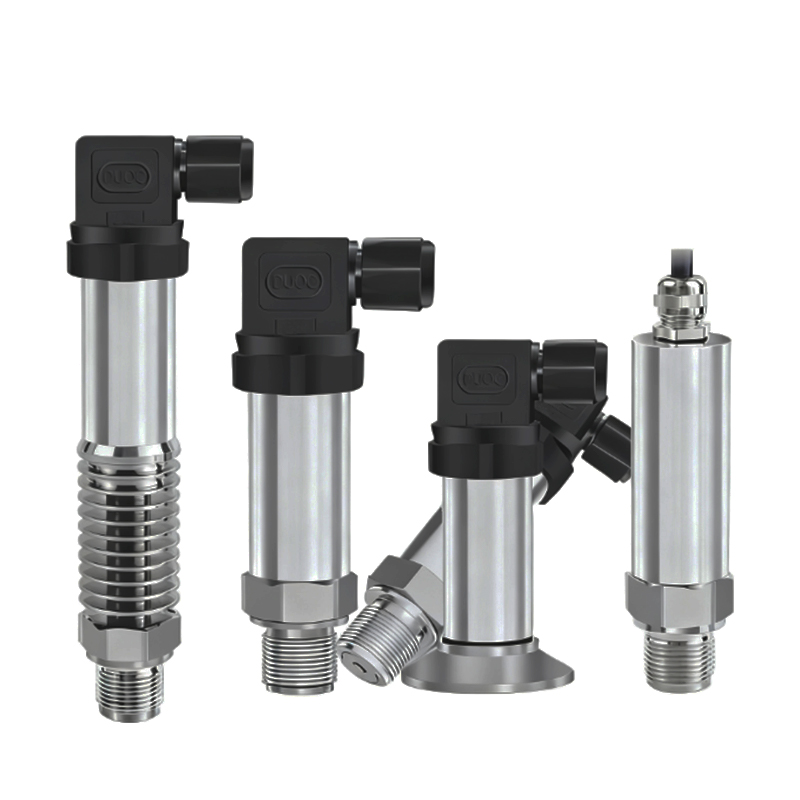

Pressure sensors serve as a cornerstone in industrial automation, environmental monitoring, medical devices, and a multitude of other domains. These sensors accurately measure and convert pressure signals, providing essential data for a wide range of applications.
The selection of an appropriate pressure transmitter is instrumental in ensuring system accuracy, reliability, and long-term stability. Consequently, mastering the methodology of choosing the right pressure transducer based on application requirements is particularly important. Below are several key steps to help you make an informed decision when choosing a pressure sensor.
1.Define Application Requirements
First, clearly define your application needs by considering the following aspects:
Measurement Range: Determine the minimum and maximum pressure values to be measured, thereby identifying sensors with a matching span.
Accuracy Requirements: Clarify precision requirements—high-accuracy sensors typically come at a higher cost but deliver more accurate measurements.
Environmental Conditions: Consider the operating environment, including temperature, humidity, vibration, and other factors that may affect sensor performance and stability. For harsh environments (e.g., high temperature, high humidity, or corrosive media), select sensors engineered with robust environmental resistance.
Interface Type: Identify the required interface type—such as analog output, digital output, or network interface. This affects data transmission, processing, and integration with your system or equipment.
2.Understand Sensor Types
Common types of pressure sensors include:
Strain Gauge Pressure Sensors: Based on the strain principle, they measure changes in resistance of strain gauges to infer pressure. They are suited for cost-sensitive, general-precision applications.
Piezoelectric Pressure Sensors: Utilize the piezoelectric effect to convert pressure into electrical signals. These transducers offer rapid response and high sensitivity, making them ideal for dynamic pressure measurement scenarios.
Capacitive Pressure Sensors: These transducers measure pressure via capacitance variations, delivering high accuracy and stability for both static and dynamic pressure monitoring.
Resistive (Piezoresistive) Pressure Sensors: Utilizing the piezoresistive effect to translate pressure into resistance changes, they are optimized for low-cost, mass-produced applications.
3.Evaluate Performance Specifications
Assess core performance metrics to validate sensor suitability:
Sensitivity: The sensor’s responsiveness to pressure fluctuations—higher sensitivity generally enhances measurement precision.
Linearity: The degree of linear correlation between sensor output and applied pressure; superior linearity ensures more accurate readings.
Long-Term Stability: The sensor’s ability to maintain consistent performance over its lifecycle, directly influencing service life.
Temperature Coefficient: The extent to which temperature variations affect performance; selecting sensors with low temperature coefficients minimizes thermally induced measurement errors.
4.Consider Cost and Reliability
Finally, cost is a critical factor. Prices vary significantly across different sensor types and performance levels, so it’s essential to balance budget constraints with actual requirements. Additionally, evaluating sensor reliability and after-sales support is vital. Choosing manufacturers with strong reputations and long-term technical support reduces maintenance costs and operational risks.
In conclusion, pressure sensor selection is a systematic process that demands a comprehensive understanding of application scenarios, measured media, and environmental challenges. By rigorously evaluating measurement principles, range and accuracy, media compatibility, environmental protection, signal interfaces, and total cost of ownership, an optimal solution can be identified. Only by precisely matching the sensor to system requirements can long-term stable operation be ensured, maximizing return on investment and providing a robust data foundation for intelligent control systems.